


 #
#
History of St. John’s Wort #
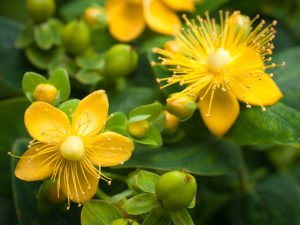
St. John’s Wort (Hypericum perforatum) has a long and storied history as a medicinal herb, dating back to ancient Greece. Named after St. John the Baptist, as it traditionally blooms around the time of his feast day in late June, the herb was used by early Christians to ward off evil spirits. Ancient physicians, including Hippocrates and Galen, prescribed it for its wound-healing and mood-enhancing properties. Throughout medieval Europe, it was commonly used as a remedy for “melancholy,” infections, and nerve pain.
In modern herbal medicine, St. John’s Wort remains widely popular, particularly for supporting mental health.
Medicinal Benefits of St. John’s Wort #
St. John’s Wort contains active compounds such as hypericin and hyperforin, which are thought to contribute to its therapeutic effects:
Mood Enhancement and Depression Relief:
The herb is widely used to alleviate mild to moderate depression and symptoms of seasonal affective disorder (SAD).
It may help regulate mood by increasing serotonin, dopamine, and norepinephrine levels in the brain.
Anxiety and Stress Reduction:
St. John’s Wort is believed to help reduce symptoms of anxiety and promote relaxation.
Sleep Support:
The herb can improve sleep quality by helping manage stress and mild insomnia.
Wound Healing and Skin Care:
Applied topically, St. John’s Wort oil can promote healing of minor burns, cuts, and wounds due to its anti-inflammatory and antibacterial properties.
Nerve Pain Relief:
It has been traditionally used to relieve nerve pain, including sciatica and neuropathy.
Scientific Evidence Supporting St. John’s Wort #
Depression Treatment:
A meta-analysis published in Cochrane Database of Systematic Reviews found that St. John’s Wort is more effective than a placebo and comparable to prescription antidepressants for mild to moderate depression, with fewer side effects.
Anxiety Management:
Some studies indicate that St. John’s Wort may reduce symptoms of anxiety, though evidence is less robust compared to its antidepressant effects.
Wound Healing:
Research published in Phytomedicine highlighted its potential for accelerating wound healing and reducing inflammation when applied topically.
How to Make St. John’s Wort Tea #
St. John’s Wort tea offers a gentle way to enjoy its mood-supporting and stress-relieving benefits.
Ingredients:
- 1 to 2 teaspoons dried St. John’s Wort flowers or leaves
- 1 cup (8 oz) boiling water
- Optional: honey or lemon for flavour
Instructions:
- Place the dried St. John’s Wort in a teapot or mug.
- Pour boiling water over the herb.
- Cover and steep for 5 to 10 minutes.
- Strain and discard the herbs.
- Add honey or lemon if desired for taste.
- Drink 1 to 2 cups daily as needed.
Additional Uses of St. John’s Wort #
- Topical Oil: Infuse St. John’s Wort flowers in oil for a soothing remedy for burns, cuts, and muscle pain.
- Capsules or Tinctures: Available in supplement form for standardized dosing to support mental health.
- Aromatherapy: The herb’s essential oil is sometimes used for its calming properties.
St. John’s Wort continues to be a valuable herb for promoting emotional balance and well-being. Proper usage, along with healthcare advice, ensures safe and effective integration into natural wellness routines.
Caution: St. John’s Wort can interact with various medications, including antidepressants, birth control pills, blood thinners, and medications for heart conditions. It may cause photosensitivity in some individuals. Consult a healthcare provider before use.


