


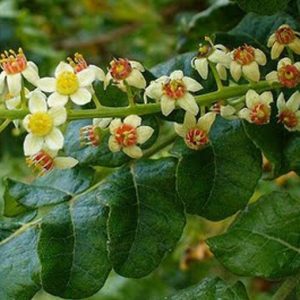
Boswellia, also known as Indian frankincense, is derived from the resin of the Boswellia serrata tree, native to India, North Africa, and the Middle East. It has been used for thousands of years in traditional Ayurvedic and Middle Eastern medicine to treat inflammatory conditions, support joint health, and enhance spiritual rituals. The resin, called “frankincense,” was historically a valuable commodity and often used in religious ceremonies and incense production. Ancient texts from India and Egypt document its medicinal and aromatic applications.
Medicinal and Health Benefits of Boswellia #
Anti-Inflammatory Properties:
Boswellia is renowned for its ability to reduce inflammation by inhibiting certain pro-inflammatory enzymes.
Joint Health:
It may alleviate symptoms of osteoarthritis and rheumatoid arthritis, reducing pain and stiffness.
Respiratory Support:
Boswellia helps improve symptoms of asthma and bronchitis by reducing airway inflammation.
Digestive Health:
It is sometimes used to manage inflammatory bowel diseases like ulcerative colitis and Crohn’s disease.
Pain Relief:
The resin is believed to offer natural analgesic properties for muscle and joint pain.
Scientific Evidence #
- Arthritis Relief: A 2008 study published in Arthritis Research & Therapy found that Boswellia significantly reduced pain and improved physical function in individuals with osteoarthritis.
- Asthma Management: Research in the European Journal of Medical Research demonstrated that Boswellia extract improved lung function and reduced asthma symptoms in participants.
- Inflammatory Conditions: Studies show that Boswellic acids in the resin inhibit 5-lipoxygenase (5-LOX), a key enzyme involved in inflammation pathways.
While evidence supports its effectiveness for certain conditions, more clinical trials are needed to confirm its full range of benefits.
Uses of Boswellia #
Herbal Supplements:
Available in capsule, tablet, and extract form for convenient dosing.
Essential Oils:
Boswellia oil is used in aromatherapy for stress relief and relaxation.
Topical Applications:
Creams and balms containing Boswellia are used to relieve joint and muscle pain.
Herbal Teas:
Boswellia resin can be steeped to make a soothing tea that supports respiratory health and reduces inflammation.
How to Make Boswellia Tea #
Ingredients:
- 1 teaspoon Boswellia resin (pure and food-grade)
- 2 cups water
- Optional: Honey, cinnamon, or ginger for added flavour
Instructions:
- Bring the water to a gentle boil in a saucepan.
- Add the Boswellia resin to the boiling water.
- Lower the heat and simmer for 10-15 minutes.
- Strain the tea through a fine mesh to remove resin particles.
- Sweeten with honey or add spices as desired.
- Serve hot and enjoy.
Note: Due to its strong taste, start with small quantities of Boswellia and increase gradually if tolerated. Drink in moderation and consult a healthcare provider for regular use.
Health Disadvantages of Boswellia #
Gastrointestinal Issues:
Some individuals may experience nausea, diarrhoea, or acid reflux when consuming Boswellia.
Drug Interactions:
Boswellia may interact with medications for blood thinning or immune suppression. Consult a healthcare provider before use if on prescription medication.
Allergic Reactions:
Skin or respiratory sensitivity reactions can occur in some individuals, particularly with Boswellia essential oils.
Pregnancy and Breastfeeding:
Limited research exists on its safety for pregnant or breastfeeding women, so caution is advised.


