


TIBETAN BUTTER TEA
Welcome back to Herbhearts, your go-to source for all things herbal tea and wellness! Today, we’re taking a trip to the Himalayas to explore one of the most unique and intriguing teas in the world: Tibetan Butter Tea, also known as Po cha. This rich, creamy drink has a fascinating history, surprising health benefits, and cultural significance that makes it a standout in the world of teas. Let’s dive into the world of butter tea and uncover its many layers of tradition and wellness.💚
A Taste of Tradition: The History of Tibetan Butter Tea🍵
Tibetan butter tea has been a staple of Himalayan culture for centuries. Its origins date back to Tibet’s ancient trade routes, where tea was bartered for yak butter and salt. The tea is traditionally made with brick tea, a form of compressed black tea that travelled well in the cold, rugged terrain of the Himalayas. The addition of butter and salt was practical—it provided a warming, high-calorie beverage to sustain nomads, monks, and villagers in the harsh, high-altitude climate.
Butter tea is more than just a drink; it’s deeply ingrained in Tibetan hospitality. Guests are often served a steaming cup of butter tea as a warm welcome, and their cups are continuously refilled—a sign of respect and generosity. It’s even consumed in monasteries during meditation and religious ceremonies, symbolizing harmony and sustenance.
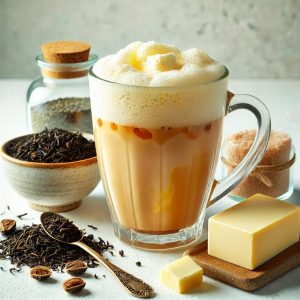
What’s in Tibetan Butter Tea?
Tibetan butter tea is made with just a few simple ingredients:
- Pu-erh or black tea leaves (traditionally brick tea)
- Yak butter (or cow butter in modern versions)
- Salt (Himalayan or rock salt for authenticity)
- Water
The ingredients are blended into a creamy, frothy drink, traditionally by churning them in a wooden butter churn called a chandong. In modern kitchens, a blender can achieve the same effect!
Medicinal Benefits of Tibetan Butter Tea
While butter tea may sound indulgent, it offers unique health benefits, especially for those living in extreme conditions like the Himalayas:
-
Energy Booster⚡
Butter tea is calorie-dense, making it a great source of energy. The combination of butter and tea provides a quick pick-me-up for physical activity, long treks, or meditation. -
Hydration in Dry Climates💧
The high-altitude air of Tibet is notoriously dry. Butter tea helps combat dehydration, providing both hydration from the tea and moisture from the butter. -
Supports Brain Function🧠
The saturated fats in yak butter are thought to support brain health by providing a steady source of energy. It’s similar to the concept of “bulletproof coffee” but has been practiced for centuries! -
Rich in Antioxidants🏵️
The tea base, usually Pu-erh or black tea, is loaded with antioxidants that help combat free radicals, support heart health, and improve digestion. -
Warming Properties😊
The combination of hot tea and butter creates a warming effect, making it ideal for cold climates or winter days.
How to Make Tibetan Butter Tea at Home
Ready to try this Himalayan classic? Here’s how to make your own Tibetan Butter Tea:
Ingredients:
- 2 cups of water
- 1 tablespoon of Pu-erh or black tea leaves (or 2 tea bags)
- 2–3 tablespoons of unsalted butter (yak butter for authenticity, but regular butter works)
- 1/4 teaspoon of salt (Himalayan salt if possible)
- Optional: 1/4 cup of milk for extra creaminess
Instructions:
- Boil the water and steep the tea leaves for 5–7 minutes. Strain the tea.
- Pour the tea into a blender (or a traditional butter churn, if you have one).
- Add the butter, salt, and milk (if using). Blend until the tea is creamy and frothy.
- Serve immediately in a small bowl or cup, and enjoy this hearty, warming drink!
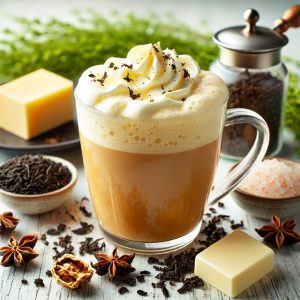
Facts About Tibetan Butter Tea
- High-Altitude Adaptation: Butter tea is packed with calories, which help people living at high altitudes maintain their energy levels and stay warm.
- Yak Butter’s Unique Flavour: Traditional yak butter has a nutty, slightly tangy taste that’s distinct from cow’s butter. It’s a must-try if you ever visit Tibet!
- Tea for Meditation: Monks often drink butter tea before long meditation sessions, as it helps sustain focus and energy.
- A “Bulletproof” Connection: Tibetan butter tea inspired the modern “bulletproof coffee” trend, which uses butter and MCT oil for similar energy-boosting effects.
- Customary Refills: If you’re offered butter tea in Tibet, your host will keep refilling your cup until you signal you’re finished by leaving it untouched.
Other Uses of Butter Tea
Butter tea isn’t just a drink—it has practical uses in Tibetan culture as well:
- Tsampa: A staple Tibetan dish made by mixing barley flour with butter tea to create a doughy, energy-packed snack.
- Lamp Fuel: Traditional yak butter is often used in butter lamps, which are symbolic offerings in Tibetan Buddhist rituals.
- Cultural Symbolism: Sharing butter tea is a sign of community and unity, often served during celebrations, religious gatherings, and even weddings.
A Tea Like No Other
Tibetan Butter Tea isn’t your typical herbal tea—it’s a cultural experience, a historical treasure, and a unique way to nourish your body and soul. While it may not replace your favourite herbal blend, it’s a testament to how tea can sustain and connect people across centuries and landscapes.
Would you give Tibetan Butter Tea a try? If you enjoyed this article, don’t forget to explore more global tea traditions here at Herbhearts. Let’s sip and celebrate the world of tea together!🌿💚
Please remember that it’s always a good idea to consult a healthcare professional before adding herbal teas to your routine.


