


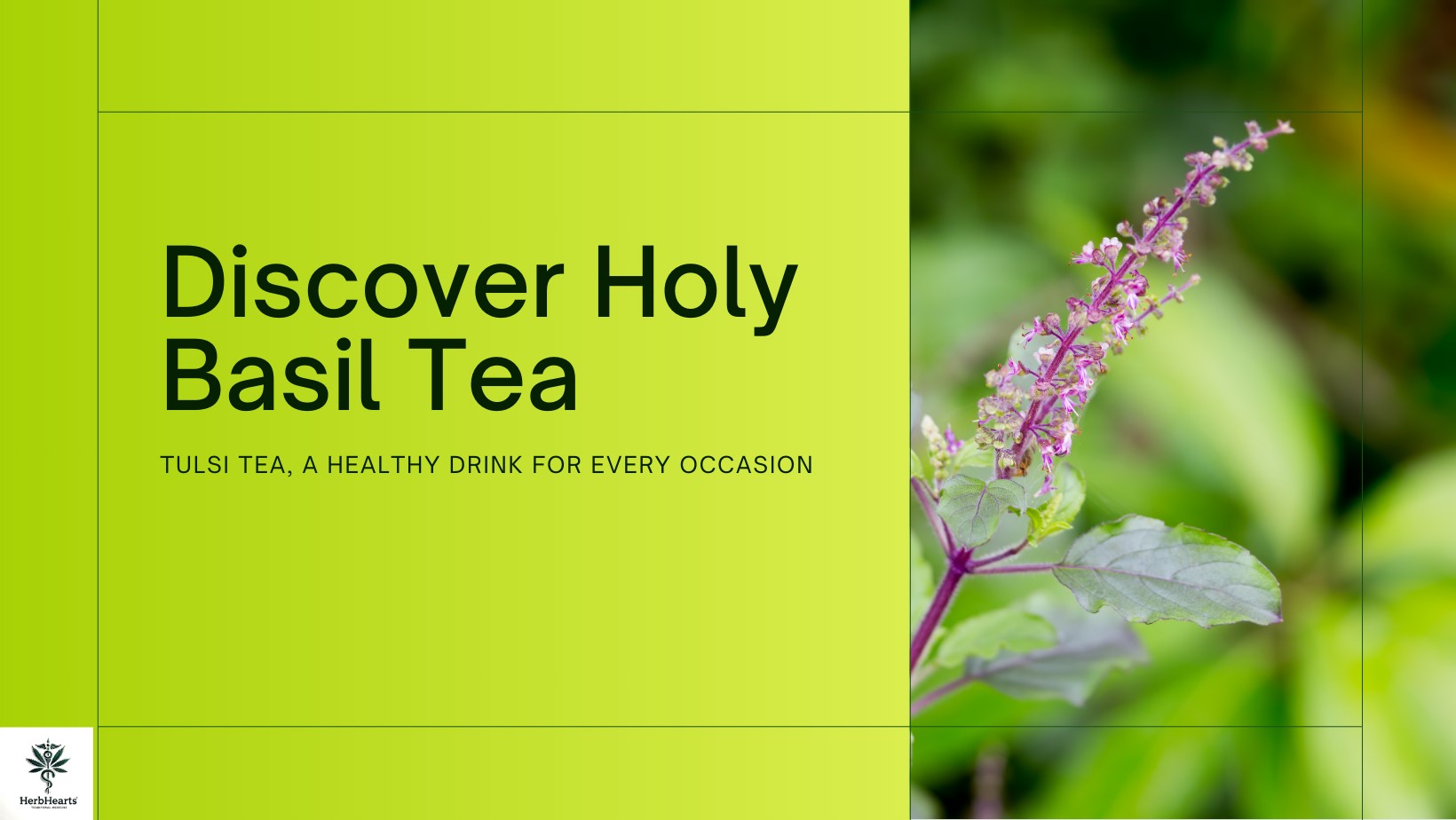
HOLY BASIL (TULSI) TEA
Welcome, or welcome back to Herbhearts, your go-to blog for everything herbal tea! 🌱💛 Today, we’re diving into one of the most powerful, revered, and health-boosting teas in the world—Holy Basil Tea, also known as Tulsi Tea!
From ancient Indian Ayurvedic traditions to modern-day wellness routines, Tulsi has been treasured for its stress-relieving, immune-boosting, and detoxifying properties. If you’re looking for a natural way to calm the mind, strengthen the body, and nourish the soul, a cup of Tulsi tea is exactly what you need!
Let’s explore the rich history, incredible benefits, and easy ways to brew this “Queen of Herbs.” 👑🍵
🌿 What is Holy Basil (Tulsi)?

Holy Basil, or Tulsi (Ocimum sanctum or Ocimum tenuiflorum), is a sacred herb in India, deeply rooted in Ayurvedic medicine. Unlike common basil used in cooking, Tulsi is a medicinal powerhouse with a slightly spicy, clove-like flavour and a hint of sweetness.
There are three main types of Tulsi used in tea and herbal remedies:
✅ Rama Tulsi – Sweet, mild, and slightly cooling 🌱
✅ Krishna Tulsi – Peppery, spicy, and rich in antioxidants 🔥
✅ Vana Tulsi – Wild, aromatic, and packed with essential oils 🍃
Each variety has slightly different properties, but all Tulsi types are considered adaptogens—herbs that help the body adapt to stress and restore balance.
Holy Basil has been revered in India for over 3,000 years! 🌍✨
🏛️ Ayurvedic Medicine – Tulsi has been used in Ayurveda (one of the world’s oldest medical systems) for its ability to reduce stress, boost immunity, and enhance overall vitality.
🛕 Hindu Tradition – Tulsi is considered a sacred plant, often grown in homes and temples as a symbol of protection and purification. Many Hindus drink Tulsi tea as a spiritual tonic to promote mental clarity and inner peace.
⚕️ Traditional Healing Systems – Tulsi has been used in Siddha, Unani, and traditional Chinese medicine for its ability to detoxify the body, aid digestion, and fight infections.
Today, science is catching up with what ancient healers knew—Tulsi tea is a true superfood for the body and mind!
🌟 The Medicinal Benefits of Tulsi Tea
1️⃣ The Ultimate Stress & Anxiety Reliever 😌🌿
Tulsi is a natural adaptogen, meaning it helps the body cope with physical, emotional, and environmental stress.
-
Reduces cortisol levels (the stress hormone) 📉
-
Promotes relaxation & mental clarity 💆♂️
-
Supports adrenal gland function ⚡
Multiple studies confirm that drinking Tulsi tea regularly can help manage anxiety, depression, and fatigue! 🌿✨
2️⃣ Immune System Booster & Natural Cold Remedy 🤧🛡️
Holy Basil is packed with antioxidants, antibacterial, and antiviral compounds that help:
-
Strengthen the immune system 🦠💪
-
Fight off colds, flu, and respiratory infections 🤒
-
Soothe sore throats & coughs 🗣️
During flu season, a warm cup of Tulsi tea with honey and ginger is the perfect natural remedy! 🍯🍵
3️⃣ A Heart-Healthy Tea for Blood Sugar & Cholesterol ❤️📉
Studies show that Tulsi tea can help regulate blood sugar levels and improve heart health by:
-
Reducing blood glucose & improving insulin sensitivity 🍬
-
Lowering bad cholesterol (LDL) and increasing good cholesterol (HDL) 🩸
-
Protecting against oxidative stress & inflammation 🚀
Drinking Tulsi tea daily may be beneficial for those with diabetes or high blood pressure! 💖
4️⃣ A Natural Detox & Digestive Aid 🩺🍃
Holy Basil has powerful detoxifying and gut-healing properties:
-
Flushes out toxins & supports liver function 🏥
-
Eases bloating, gas, and indigestion 🌬️
-
Soothes stomach ulcers & acid reflux 🔥
For a detoxifying herbal blend, try mixing Tulsi with ginger, fennel, or dandelion root! 🌱💛
5️⃣ Anti-Inflammatory & Pain-Relieving Effects 💆♀️🔥
Tulsi contains eugenol, a natural compound that:
-
Reduces inflammation & joint pain 🦵
-
Eases headaches & migraines 🤕
-
Supports healthy skin & fights acne ✨
For glowing skin, you can even apply cooled Tulsi tea as a face toner! 🌿💆♀️
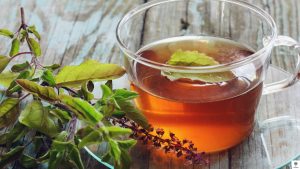
🍵 How to Brew the Perfect Cup of Tulsi Tea
Tulsi tea is easy to make and incredibly refreshing! Here’s how:
📝 Ingredients:
✅ 1-2 teaspoons of dried Tulsi leaves (or a tea bag)
✅ 1 cup of hot water (not boiling, around 190°F or 88°C)
✅ Optional: Honey, lemon, or ginger for extra flavour
👩🍳 Instructions:
1️⃣ Heat the water until it’s hot but not boiling (to preserve nutrients).
2️⃣ Steep the Tulsi for 5-10 minutes depending on how strong you like it.
3️⃣ Strain & Enjoy! Add honey, lemon, or mint for an extra boost.
💡 Pro Tip: Tulsi pairs beautifully with peppermint, chamomile, or cinnamon for a flavourful, health-boosting blend!
🌿 Other Uses of Tulsi Tea
Tulsi is incredibly versatile! Here are some creative ways to use it:
✨ Aromatherapy Steam – Inhale Tulsi-infused steam for clearer sinuses and relaxation.
🌿 Herbal Face Mist – Brew strong Tulsi tea, let it cool, and spray it on your face for refreshing hydration.
🍯 Tulsi Honey Elixir – Infuse Tulsi leaves in honey for a delicious immune-boosting sweetener!
⚠️ Precautions & Considerations
Holy Basil tea is safe for most people, but:
⚠️ Avoid if pregnant – Tulsi may affect hormone levels and uterine contractions.
⚠️ Consult a doctor if on blood thinners – Tulsi may have mild anticoagulant effects.
⚠️ May lower blood sugar – If you have diabetes, monitor your glucose levels carefully.
💛Why You Should Try Tulsi Tea
Whether you’re looking to reduce stress, detoxify, strengthen immunity, or simply enjoy a delicious herbal tea, Holy Basil is a must-try! 🌿✨
With its sacred history, powerful health benefits, and deliciously refreshing taste, it’s no wonder Tulsi is called “The Queen of Herbs.” 👑
 Remember for more herbal tea wisdom, stay tuned to Herbhearts!
Happy sippin🌿💚


